
Periodontal Disease Treatment
 Periodontal (gum) disease is a growing problem and one of the most common conditions we treat.
While good oral hygiene habits can help prevent periodontal disease, it can still happen. The earlier we catch it, the easier it will be to treat.
What Is Periodontal Disease?
Periodontal disease, or gum disease, is caused by plaque that builds up on the teeth and especially under the gumline. The sticky plaque attracts bacteria and eventually turns into hard tartar. The tartar and bacteria irritate the gums and cause infection.
Preventing Periodontal Disease
Brushing twice daily and flossing every evening using the proper technique will help remove a lot of plaque, but even the most diligent brusher and flosser may have a hard time cleaning off all the plaque, especially the plaque that hides under the gumline. You can improve your chances of staving off periodontal disease by getting twice-yearly professional dental cleanings from one of our excellent dental hygienists as recommended by the American Dental Association.
So what if you brush and floss and get your regular cleanings like you are supposed to and still get periodontal disease?
Other factors can contribute to and cause a predisposition to gum disease:
- Smoking automatically increases your odds of developing gum disease. If you need help quitting, talk to your dentist.
- Diabetes and heart disease have both been linked to periodontal disease.
- Numerous prescription medications are known to cause dry mouth, which can contribute to gum disease.
- Illnesses that inhibit your immune system, including cancer, increase your chances of developing periodontal disease.
- Genetics also play a role. Gum disease tends to run in families.
Treating Periodontal Disease
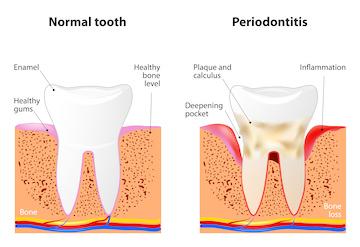 How we treat your gum disease depends a great deal on how advanced it is and how much damage it has caused. It’s important to treat gum disease, even in the early stages. Untreated gum disease will not only progress in your mouth but can also lead to health troubles throughout the rest of your body.
Mild gum disease can often be treated with a renewed commitment to good oral hygiene habits and an antimicrobial mouthwash. Moderate-to-advanced gum disease may require a deep cleaning treatment known as scaling and root planing. During this treatment, we remove the tartar from below the gum line and get rid of the rough spots where bacteria tend to gather.
If you are concerned that you might have periodontal disease, don’t hesitate. Call our office today so that we can start your treatment.